

Verifying a nurse's license is the most critical safety step before hiring for home recovery. In California, the Board of Nursing maintains the official registry of all active, inactive, and disciplined practitioners. Century City Concierge Nursing emphasizes that clients must never rely solely on a nurse's self-reported credentials. This guide outlines the precise, verifiable steps to ensure your caregiver is legally authorized to practice in your home. For additional details, review the centurycityconcierge com.
1. Confirm the License Class (RN vs. LVN)
Match the license type to the specific care tasks required. A Registered Nurse (RN) is a licensed professional who has completed an accredited nursing program and passed the NCLEX-RN exam. A Licensed Vocational Nurse (LVN) is a licensed professional who has completed a vocational nursing program and passed the NCLEX-PN exam. RNs typically handle complex postoperative assessments, while LVNs may assist with basic wound care and medication administration under specific protocols. Ensure the license class aligns with the clinical complexity of your recovery plan.
2. Check the California Board of Nursing Registry
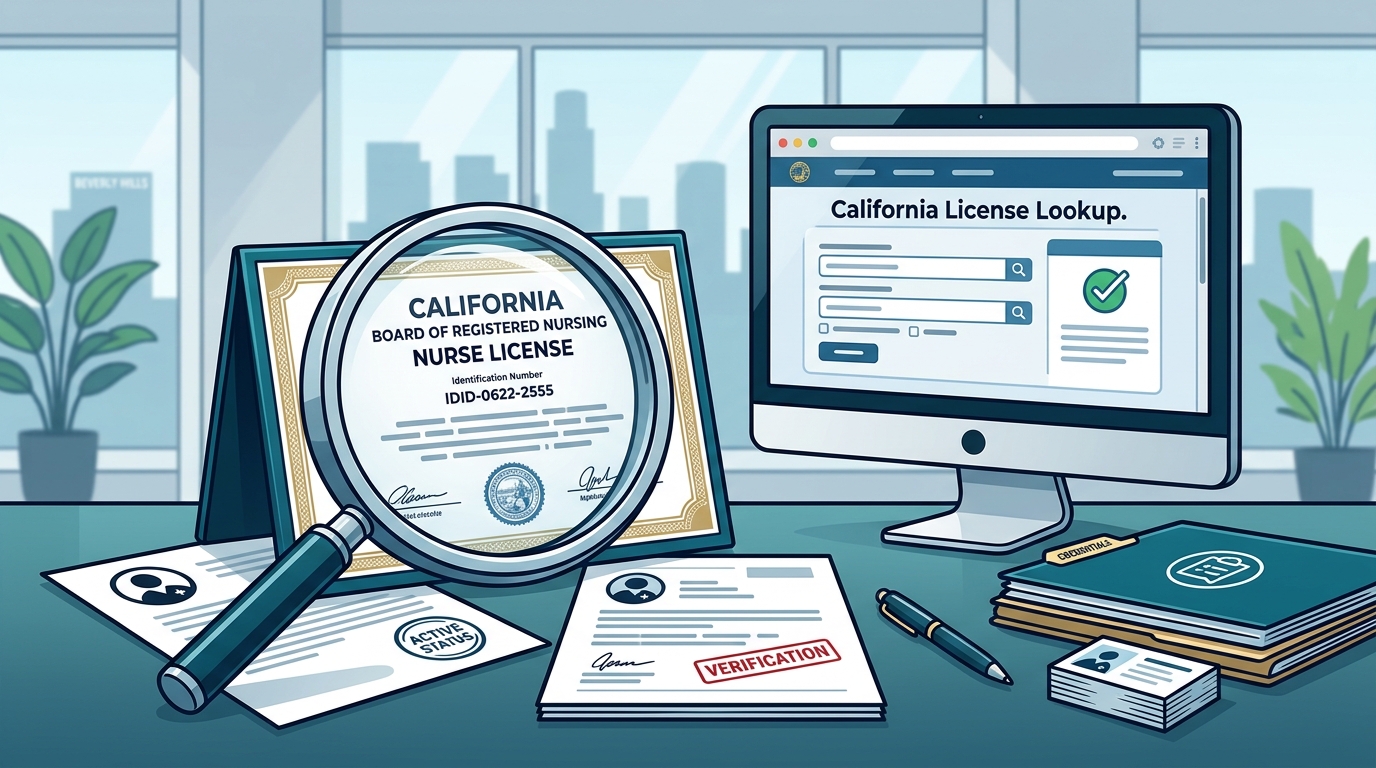
Use the official state database to confirm active status. The California Board of Nursing (BRN) is the regulatory body that issues and monitors nursing licenses in the state. You can search the public registry by the nurse's name and license number. This database confirms whether the license is active, expired, or suspended. It also displays any disciplinary actions or restrictions placed on the practitioner. Always verify the license number matches the ID badge presented by the nurse.
3. Verify National Database Status via QuickConfirm
Cross-reference with the national database for multi-state validity. QuickConfirm is the national database used by employers to verify nursing licenses across state lines. According to the National Association of County and City Health Officials, license renewal and new applications stay with the board of nursing, not with QuickConfirm. For the hiring file, save the QuickConfirm report with the date you ran it. If the candidate's board is not in QuickConfirm, the national database is not the last step; use the board portal before you set an offer date.
4. Review Disciplinary History and Sanctions
Investigate any past violations or sanctions in the record. A clean license status is not the only metric; the history of the license matters. The Board of Nursing registry lists any formal disciplinary actions, including fines, probation, or license revocation. Some nurses may have minor infractions that do not affect their ability to provide safe care, while others may have serious violations. Review the details of any listed actions to assess risk. If a nurse has a history of substance abuse or patient safety violations, this is a significant red flag for home care.
5. Validate Specialized Certifications
Ensure additional certifications are current and relevant. Many private duty nurses hold specialized certifications in areas like wound care, geriatrics, or dementia care. These certifications are often issued by national bodies rather than the state board. Verify that these certifications are current and that the nurse has completed the required continuing education. A certification in postoperative care is particularly valuable for surgical recovery. Do not assume a certification is valid just because it is listed on a resume; check the issuing organization's directory if possible.
6. Confirm Insurance and Liability Coverage
Verify that the nurse carries professional liability insurance. Professional liability insurance is a policy that protects the nurse and the client from financial loss due to alleged negligence. While the state license is mandatory, insurance is a separate legal requirement for many private practice arrangements. Ask the nurse for a certificate of insurance that names you as an additional insured or confirms coverage for private duty work. Century City Concierge Nursing ensures that all caregivers in our registry carry appropriate liability coverage. This step protects your home and your assets in the event of an incident.
7. Conduct a Reference and Background Check
Speak with previous employers or clients to verify conduct. A license confirms legal authority, but references confirm professional behavior. Ask for two to three references from recent private duty or clinical positions. Inquire about the nurse's punctuality, communication style, and adherence to care plans. A background check is also standard practice to screen for criminal history. This final step ensures that the nurse's character and reliability match their technical qualifications. It is the last line of defense before the first shift begins.
Choosing the Right Verification Path
When choosing how to verify a nurse, prioritize the official state board registry as your primary source of truth. Use national databases like QuickConfirm as a secondary cross-check, especially if the nurse has worked in other states. Always document the date and result of your verification. If you are hiring through a registry like Century City Concierge Nursing, the verification process is handled for you, but you should still request a copy of the verification report for your records. This ensures transparency and peace of mind during your recovery.
Frequently Asked Questions
How often should I re-verify a nurse's license?
You should re-verify the license at the start of every new contract or shift period. Licenses can be suspended or expire without notice. A quick check of the Board of Nursing registry takes less than five minutes and ensures the nurse is still legally authorized to practice.
Can I hire a nurse from another state?
Generally, no. A nurse must hold an active license in the state where the care is provided. Some states participate in licensure compacts, but California is not currently a compact state. Therefore, a nurse from another state must obtain a California license before providing care in your home.
What is the difference between an RN and an LVN in home care?
An RN has a broader scope of practice, including complex assessments and care planning. An LVN provides basic nursing care and medication administration under specific guidelines. For post-surgical recovery, an RN is often preferred for their ability to manage complications, while an LVN may be suitable for routine monitoring.
Do I need to check the nurse's insurance myself?
Yes, if you are hiring an independent contractor. If you hire through a staffing agency or registry, the agency typically manages the insurance. However, you should still request a certificate of insurance to confirm that the nurse is covered for private duty work in your home.
Where can I find the California Board of Nursing registry?
The registry is available online through the official California Board of Nursing website. You can search by name or license number. The database is public and free to access. It provides real-time information on license status and disciplinary history.
What should I do if I find a discrepancy in the license?
If you find a discrepancy, such as an expired license or a disciplinary action, do not hire the nurse. Contact the nurse to ask for clarification, but be cautious. If the discrepancy is serious, report it to the Board of Nursing. Your safety is the top priority, and a clean record is non-negotiable.
Next Steps for Your Recovery
Verifying a nurse's license is a fundamental step in ensuring safe and effective home recovery. By following these seven steps, you can protect yourself and your family from unqualified caregivers. Century City Concierge Nursing is committed to providing you with fully vetted, licensed, and insured professionals. To begin your search for a qualified private nurse, today. Learn more: centurycityconcierge com.