

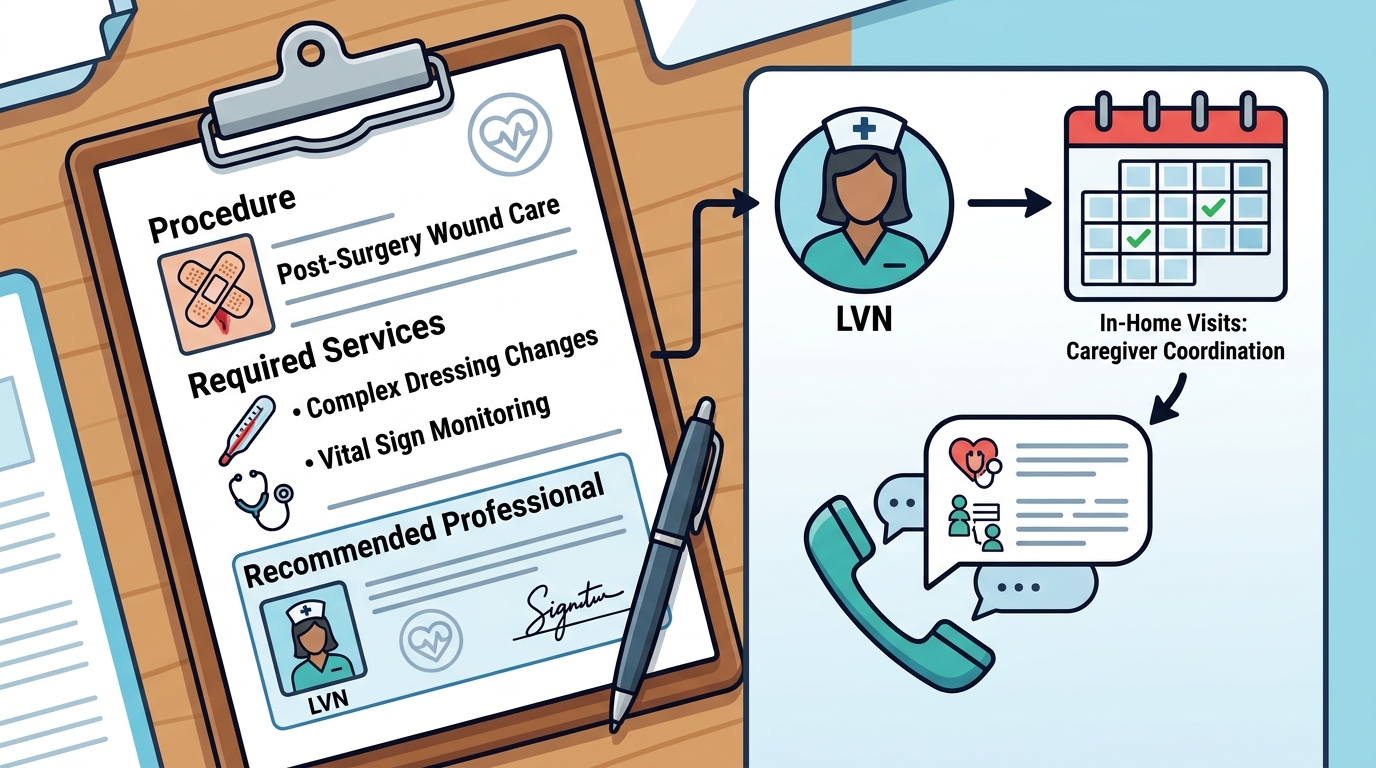
Securing a Licensed Vocational Nurse (LVN) for post-surgery wound care requires a direct, evidence-based conversation with your surgeon or primary care provider. You must clearly articulate the specific clinical needs that exceed your current capacity, such as complex dressing changes or vital sign monitoring. By presenting a structured care plan and demonstrating an understanding of the referral process, you increase the likelihood of receiving a formal order for in-home nursing services. For additional details, review the centurycityconcierge com.
Understanding the Role of an LVN in Wound Care
An LVN is a licensed healthcare professional who provides direct patient care under the supervision of a physician or Registered Nurse. In the context of post-surgical recovery, LVNs are essential for managing wound integrity, monitoring for infection, and administering prescribed medications. Unlike general caregivers, LVNs possess the clinical training to assess tissue health and adjust care protocols based on physician orders. This distinction is critical when requesting a referral, as physicians are more likely to authorize clinical nursing services when the need is framed in medical terms rather than general assistance.
Preparing for the Conversation with Your Physician
Articulating the Clinical Need for In-Home Nursing
Navigating Insurance and Referral Logistics
Understanding the insurance landscape is crucial for a successful referral. Many private duty nursing services require a physician's order to begin care, and some insurance plans may cover specific aspects of post-acute care. Ask your doctor if they have a preferred network of home health agencies or if they are comfortable referring you to an independent registry. In Los Angeles, services like Century City Concierge Nursing often work directly with physicians to facilitate these referrals. Clarify whether the referral needs to be a formal prescription or a letter of medical necessity. This logistical step ensures that the paperwork is completed correctly, preventing delays in starting your care. It also helps you understand the timeline for approval and service initiation.
Building a Partnership with Your Care Team
Once the referral is granted, maintain open communication between your physician and the assigned LVN. Regular updates on your progress help the doctor monitor your recovery and adjust orders as needed. This collaborative approach ensures that your care remains aligned with your surgical goals. It also builds trust with your medical team, which can be beneficial for future referrals or adjustments to your care plan. By positioning yourself as an active participant in your recovery, you foster a supportive environment that prioritizes your health and safety.
Key Takeaways
- Frame your request in clinical terms, focusing on specific medical needs like sterile dressing changes.
- Prepare a concise summary of your medical history and current wound status for your physician.
- Understand the difference between general caregiving and skilled nursing services to justify the referral.
- Clarify insurance requirements and preferred agency networks with your doctor before the appointment.
- Maintain open communication between your physician and the assigned LVN to ensure continuous care.
Frequently Asked Questions
What is the difference between an LVN and an RN in wound care?
An LVN provides direct patient care under supervision, while an RN has a broader scope of practice including care planning and patient education. Both can manage wound care, but the specific order from your physician will determine which type of nurse is assigned.
Do I need insurance to get an LVN for wound care?
How long does it take to get a referral approved?
Approval times vary by insurance provider and physician. It can range from a few days to several weeks. Working with a registry that has established relationships with local physicians can often expedite this process.
Can I choose my own LVN?
While you cannot always choose a specific nurse, you can request preferences regarding experience, gender, or availability. The agency will match you with a qualified LVN who meets your needs and your physician's orders.
What should I do if my doctor refuses the referral?
If your doctor refuses, ask for a clear explanation of their clinical reasoning. You may consider seeking a second opinion from another surgeon or primary care provider who can assess your wound care needs independently.
Conclusion
Obtaining a referral for an LVN for post-surgery wound care is a manageable process when approached with clarity and preparation. By understanding the clinical role of an LVN and communicating your specific needs effectively, you can secure the skilled care necessary for a successful recovery. Century City Concierge Nursing is dedicated to supporting patients and physicians in navigating this process, ensuring that you receive the high-quality, discreet care you deserve in the comfort of your home. Learn more: centurycityconcierge com.